
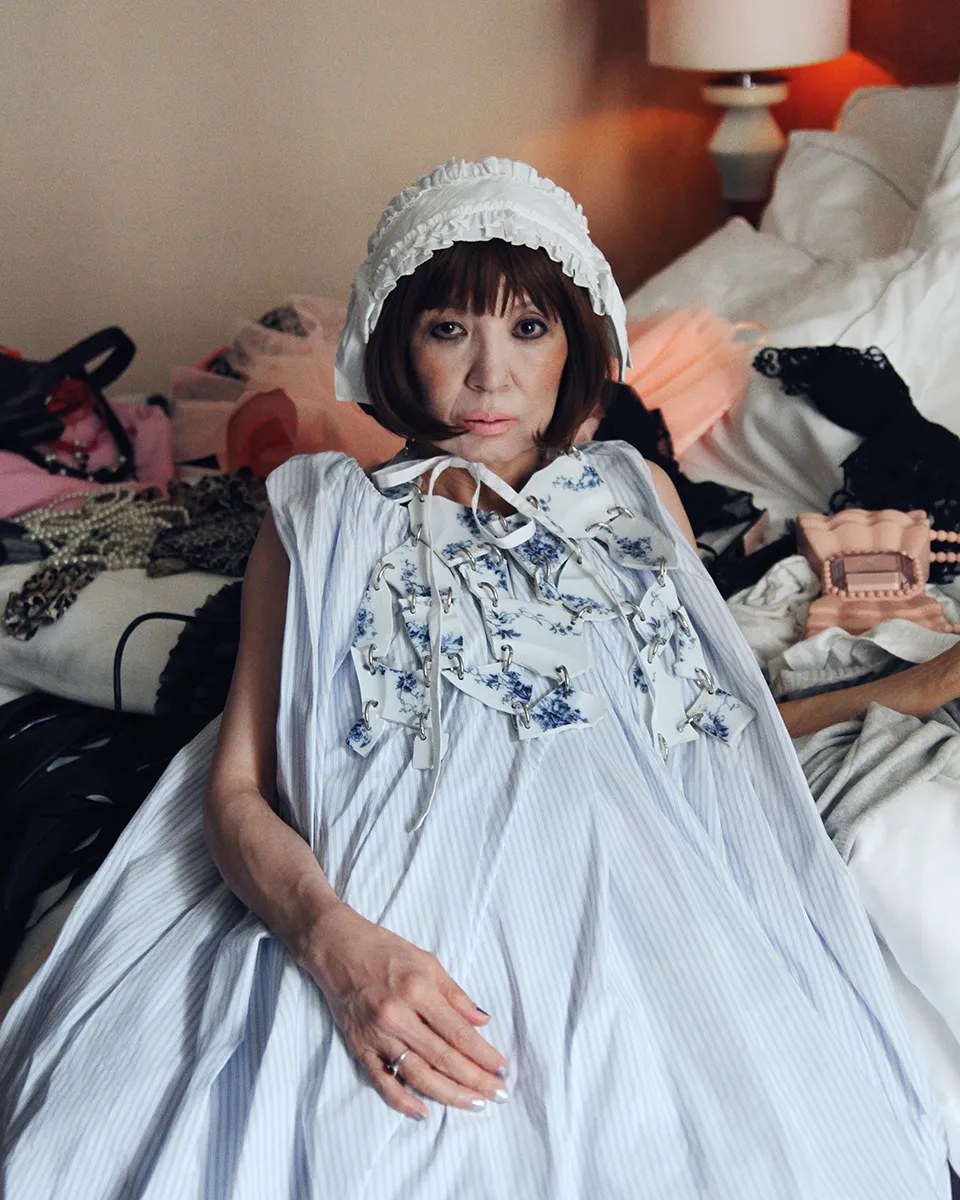
Like almost everything about her, the stylisation of POiSON GiRL FRiEND’s name feels ahead of its time. Her choice—back in 1991— to punctuate each word with a lowercase “i” wasn’t just a typographic quirk, but a foreshadowing of the internet age, in which playful distortions of case and character have become a native dialect. Those “i”s could stand for innocence or intuition—qualities that have guided nOrikO throughout her career, alongside curiosity and a love for life’s small pleasures: hearing a good song over a club’s sound system, sipping a Brewdog IPA, or spending a quiet evening at home with her orange cat, Cello.
With her coquette, French-pop-influenced whispers, unexpected strings, textured arrangements, and downtempo beats with a lingering club vibe, POiSON GiRL FRiEND crafted a sound that has only grown more prescient with time—music that seemed to arrive from a future that audiences are only now inhabiting. Her return coincides with a broader trip-hop and shoegaze revival, and comebacks by several key figures of that cultural moment: Portishead’s Beth Gibbons with her first solo album in 2024, Slowdive with their self-titled return in 2017 and everything is alive in 2023, and new Massive Attack reportedly on its way. Though her music may easily slot into a ‘nostalgia for the never-lived’ that previously brought ‘80s city pop voices like Miki Matsubara or Anri to global attention, there’s still plenty of nOrikO for curious newcomers to discover.
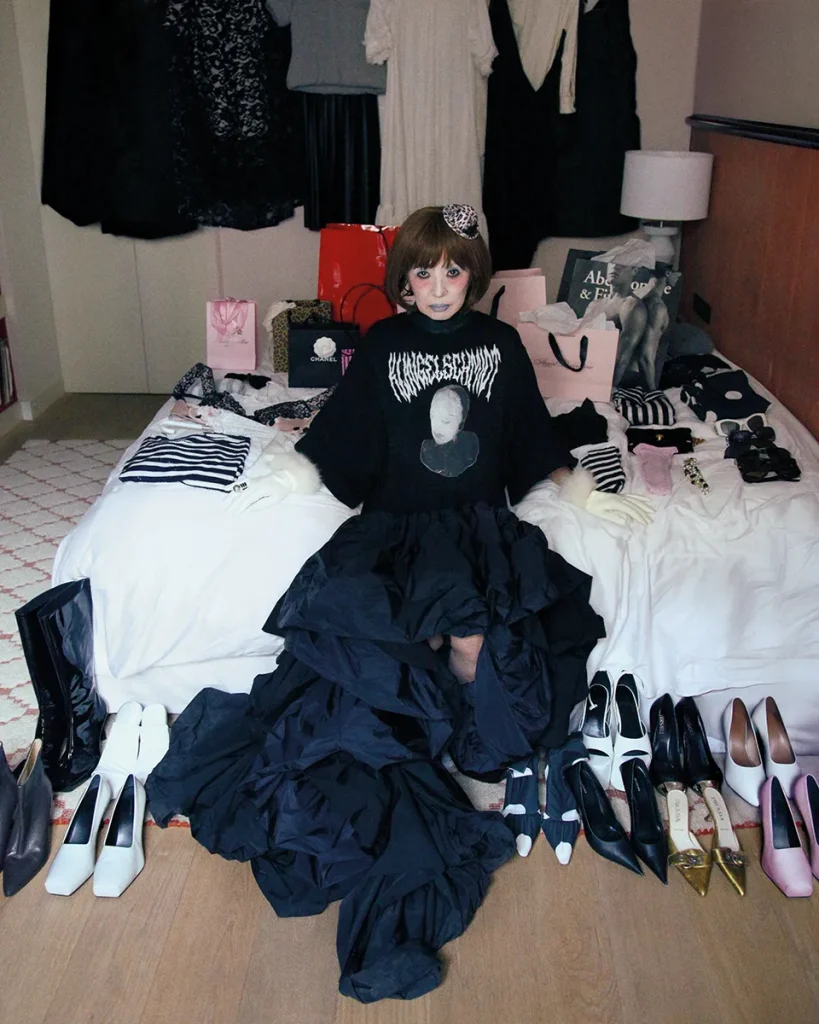
nOrikO’s past feels like a collage: born in Japan, raised in Rio de Janeiro (where she attended a French school), teenage nights spent first in Tokyo’s rock clubs and later in London, where new wave, house, and techno blurred together. A DJ for years, she briefly fronted a band (The Poison Girl Friends—plural)—but it is chiefly as the solo artist behind a string of quiet cult treasures that we know her today. She’s also ventured into house music (as Kiss-O-Matic) and ambient (as Dark Eyed Kid), and even started a blog as early as 1995—writing about her life with the same candid voice she shares on social media today. Each fragment adds up to a career that’s never followed a straight line, but has always stayed open and forward-looking.
“I WAS GATEKEEPING THIS!” a fan commented when she launched her Instagram account in 2024. POiSON GiRL FRiEND embodies the thrill of unearthing a hidden gem. In a pre-internet era, that thrill might have been the exclusive purview of crate diggers—as was the case for Scottish avant-pop musician Momus, who stumbled upon her record Melting Moment and was surprised to find a project with a name inspired by his own album, The Poison Boyfriend. He would end up producing her 1993 record Shyness. Today, that excitement lives on in the form of lore-hungry, online-rabbit-hole explorers—like the Emirati-Egyptian shoegaze artist Mayah Alkhateri, who came across the same album cover on Tumblr, where it was being shared with the same low-key itgirl vibe that elevated the likes of Lana del Rey or Charli XCX in the 2010s. This encounter led, in 2023, to ‘So Many Ways,’ the collaborative track with Alkhateri and Sega Bodega’s project Kiss Facility.
The exact tipping point for POiSON GiRL FRiEND’s global resurgence is hard to pinpoint. Though she released albums in 2014 and 2018 that diverged from her ‘90s sound without breaking through commercially, the rediscovery began in earnest when her early albums appeared on streaming platforms in 2021, and her 1993 track ‘Poison’ was included on the compilation Heisei No Oto: Japanese Left-field Pop From the CD Age (1989-1996) that same year. Two years later, Melting Moment was reissued on vinyl—featuring her most-streamed song ‘HARDLY EVER SMILE (without you).’ “POiSON GiRL FRiEND resurgence was not on my 2024 bingo card,” a fan wrote on Reddit, during nOrikO’s first-ever US tour. “What a year for music seriously…” Whatever the cause, the result is clear: sold-out shows across Europe and the US, glowing re-reviews of her early work, and a global resonance with new fans onand offline.
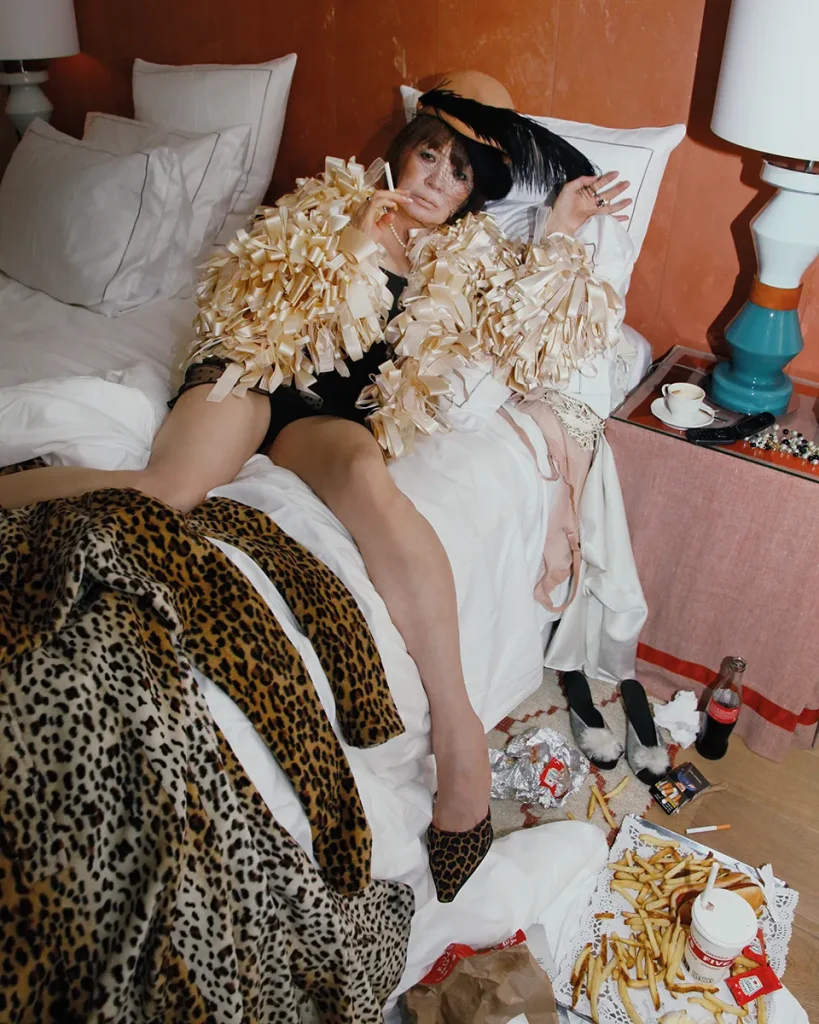
Jacket CLARA MARIA KREISBERG Dress FIORUCCI Hats MARIS ROSE THOMPSON Shoes STYLIST’S OWN
NOA CID BLANCO: Over the past year, you’ve toured the world—China, Europe, Japan, and the US (for the first time)…
POiSON GiRL FRiEND: Every city had something. I met many young people in each place, all innocent and lovely. I didn’t feel they were that different, even though they are from very different countries… maybe because we are all living in an internet world!
NCB: Back in the ‘90s you already had your own website and blog. You wrote so much about the shows you were going to at the time, the music you were listening to…
PGF: It was around 1995 when the internet started as a hub. I was so interested in it—it made me feel like the world is very small. At that time, there wasn’t even Google, we only had Yahoo. I made my own homepage and programmed it using HTML. It was so much fun for me. I couldn’t draw paintings or illustrations, but with HTML it was easy to create designs—you just needed the right code. I learned the Internet language all by myself, using some books.
NCB: Actually, you not only talked a lot about music, but also about the software you were using, or even the websites you visited, or your new screen-savers. Do you think that if you hadn’t chosen music as a career you could have become a programmer or web designer?
PGF: If I were from a younger generation, maybe I’d have been a web designer!
NCB: When did you first realise you wanted to be a musician or a DJ?
PGF: At first, I didn’t think about performing—I wanted to be a music journalist! But I wasn’t very good at writing in Japanese, so I didn’t think I could do it. I was very interested in music as a child, around eight or nine. I always read music magazines and listened to the radio. I was really influenced by that, and because I loved music so much, I wanted to introduce my favourite artists to everybody by becoming a music journalist.
NCB: Which music magazine was your favourite, or which would you have liked to write for?
PGF: NME, the British music paper.
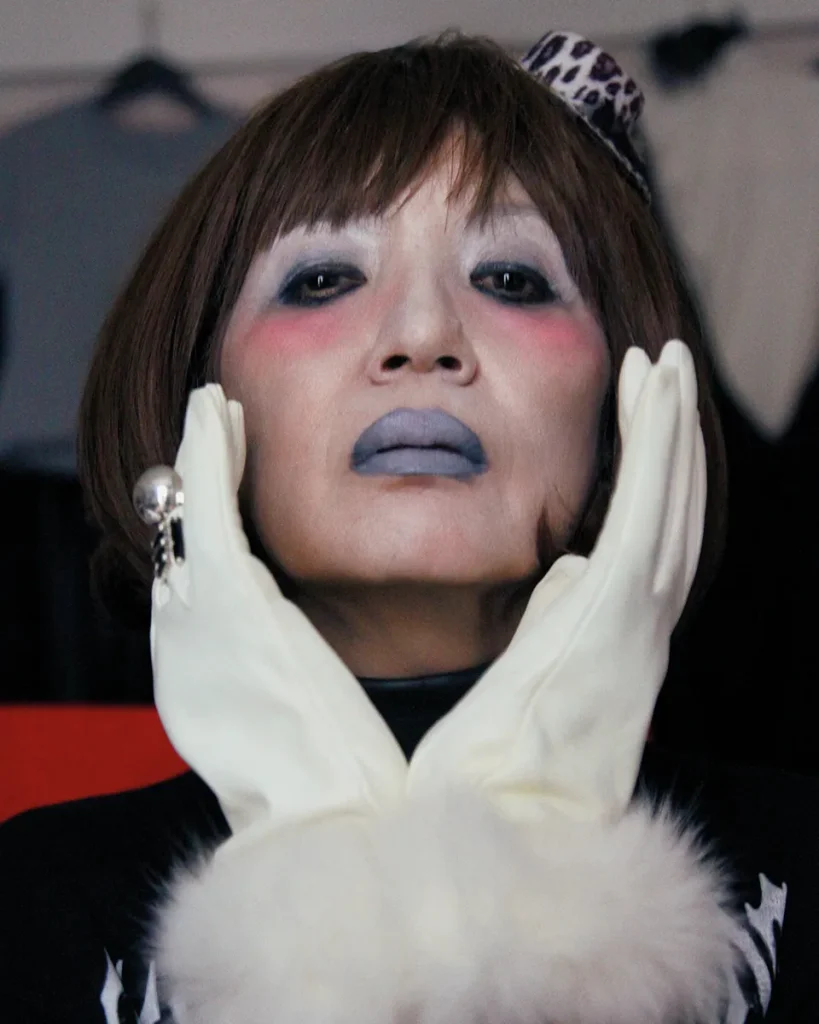
Dress MAYA KLINGELSCHMIDT Gloves SQUILLACE 1923 Hat STYLIST’S OWN Ring ALAN CROCETT
NCB: How does it feel to perform songs from Melting Moment, Shyness, or Love Me, in front of such young audiences, who may have only recently discovered them?
PGF: The first thing is, I’m amazed! I wrote those songs 30 years ago, and for this generation to love them and come to my concerts… that’s an amazing thing. When I sing, I feel… “It’s my song!” Sometimes I remember those days. And sometimes I feel a little bit sad because I’m no longer young.
NCB: You and your music will always be young as long as that connection exists. When writing those songs—or even now—what thoughts or emotions do you think you and your young fans around the world have in common?
PGF: I think it’s about my way of living, without lies or pretence. I’m always living in truth, with a pure mind and innocence. Maybe that’s something they can sense.
NCB: An ambient version of ‘French Kiss’ by Lil Louis inspired you to make club music. Before that, you were influenced by The Smiths and The Cure, and wanted to make acoustic music. But even earlier, was there a song or an album without which POiSON GiRL FRiEND wouldn’t exist?
PGF: Around 1980, the British band Visage had a song called ‘Mind Of A Toy.’ When I heard it, I suddenly thought, “Oh, I should be making music.”
NCB: If it was Visage, I would have expected it to be ‘Fade to Grey!’
PGF: Indeed. Visage is famously known for ‘Fade to Grey,’ but when I heard ‘Mind of a Toy,’ it struck me like a bolt of lightning— the inorganic rhythms, the sound effects, and the lyrics.
NCB: That’s so magical. I’m sure people from this generation are listening to your music and thinking, ‘I want to make something as beautiful as this.’
PGF: Please!! My pleasure!
NCB: Your ambient project Dark Eyed Kid is named after a William Orbit song. You crossed paths with him at some point…
PGF: Yes. We only performed together once, in Tokyo. He became very big, very busy, so collaborating with him was difficult.
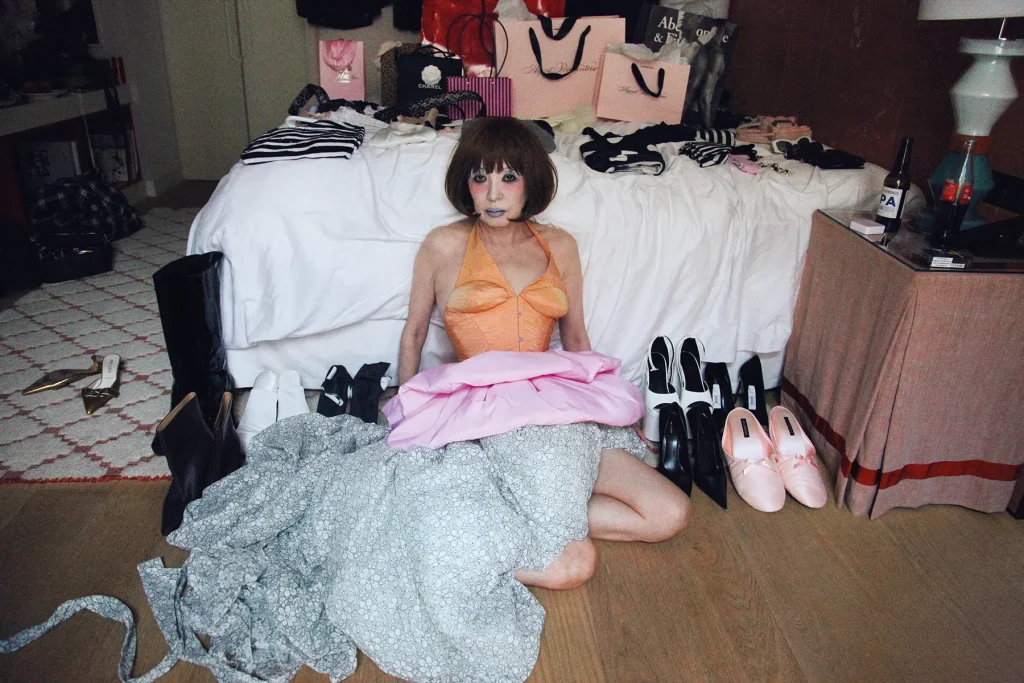
Corset and skirt MARIS ROSE THOMPSON Short skirt KHRISJOY
NCB: Before making music, you were already a DJ. I saw on Twitter that you leveled-up your skills at Boiler Room last year because of an incident with a hair straightener. What happened?
PGF: Oh, yes, it was in Hong Kong! I burned myself, but I had to DJ, so I put my hand in an icebox and DJed with the other hand. When I finished my set, I went to the hospital! I always have problems on tour.
NCB: When you’re not touring or performing, what do you like to do?
PGF: I’m a quiet person, I love staying at home with my cat and having a little wine—not too much! I like both red and white.
NCB: Your cat Cello! I see the pictures you post of her on your Instagram. Is she named after the musical instrument? I also love when you call her “Cellolita.”
PGF: Yes, I named her after the musical instrument. She’s a girl, a female cat, but she looks like a boy. So Cellolita is her girly name!
NCB: I bet she’s the big cat on the cover of exQuisxx, the 2023 compilation with a selection of songs from the albums you released with Nippon Columbia in the ‘90s… Am I right?
PGF: Yes! That illustration is by suppa micro panchop. He’s a very talented artist, and I like his paintings, so I asked him to create my cover.
NCB: I know that you also like cinema. Have you seen anything good lately?
PGF: Tomorrow, I’m going to see the film about the French composer Michel Legrand—it’s about his music. And recently, I watched the Brazilian film I’m Still Here. It’s a very, very intense story about the ‘70s in Brazil. I lived there, in Rio de Janeiro, in the 70s, so it really moved me. It’s so hard, so, so sad for me. But yes, I love films. Leos Carax, Jean-Luc Godard, David Lynch…
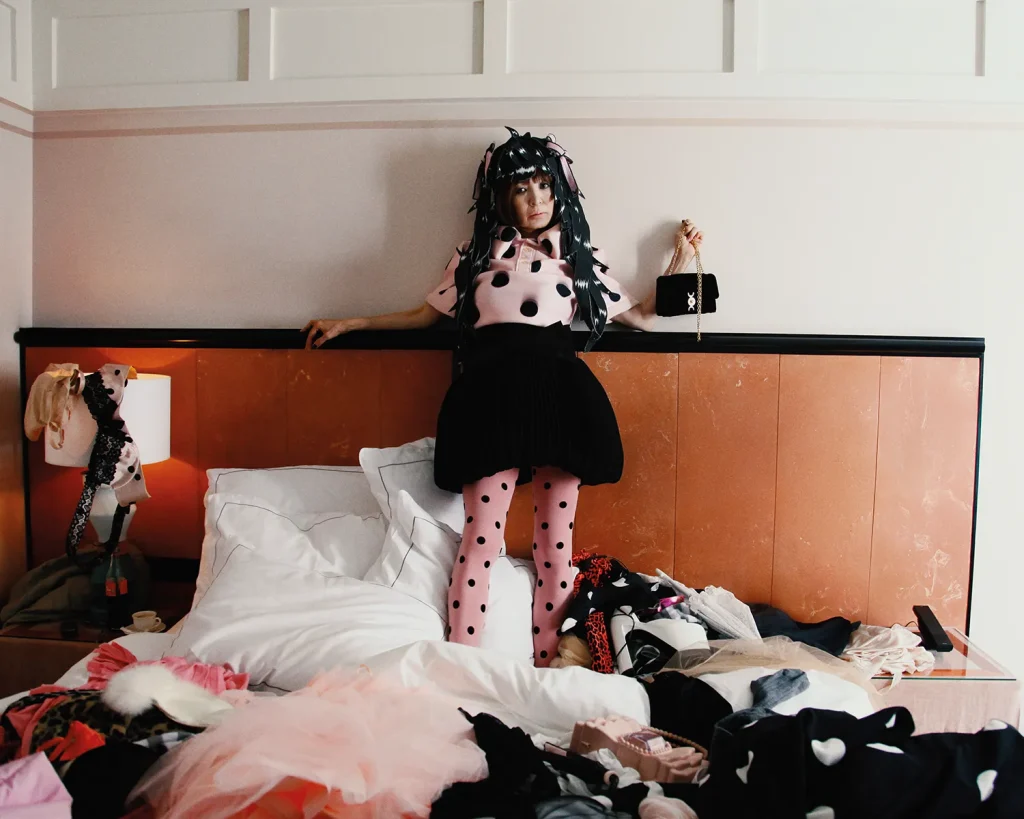
Top VICTOIRE PÉDRON Skirt MM6 MAISON MARGIELA Tights CAPRICE Belt STYLIST’S OWN Headpiece CFIERCE Bag VERSACE
NCB: You have many global influences—you’ve also mentioned Serge Gainsbourg, John Lydon, Ray Bradbury, Derek Jarman… Which Japanese artists would you recommend to your fans?
PGF: The painter Yoshitomo Nara—his art is so cute! I really love him and his work. And Takeshi Kitano, Takeshi’s films. As for musicians, I like kmmg. You may not know them—they’re very indie. They make Japanese electro-pop and electro-rap. I love them because they sing in Japanese but use their own words, and also produce their own music videos. They are very talented.
NCB: What about DJs?
PGF: One of the kmmg members, Kamaida, is also a very good DJ. I also know many DJs from the ‘90s, like DJ Wada—he’s a techno DJ, a very nice person, and a really good DJ.
NCB: As someone who has been a clubber from a very early age, why do you think the club is still important in an age when we’re more and more connected online?
PGF: I like listening to music very loudly, not just in my ears! It’s important to experience music on a good sound system. And meeting people—that’s a very important thing. I don’t go to clubs that much nowadays because parties start at midnight, and I’m a little tired at my age. But when I was younger, [going to] all parties and staying at the club until morning was totally fine!
NCB: Rather than clubs, do you prefer bars these days? There are so many in Tokyo.
PGF: I used to go to Rhythm Cafe in Shibuya. I haven’t been there in a few years, but it’s still around, and it’s a good place for young people—a very friendly place.
NCB: Japan has a long tradition of ongaku kissas—cafés where people gather to listen to music together in silence. I don’t think that’s very common in other parts of the world, but I heard that you visited the listening bar kwia when you went to Berlin?
PGF: Yes! At kwia they played really nice ambient. We had a similar place in Tokyo, in Nishi-Azabu, although it’s now closed. I was called Bullet’s. Everyone took off their shoes, relaxed on the sofas, and just enjoyed the music.
NCB: My personal favourite is the meikyoku kissa [a listening space for classical music] Lion in Shibuya. I always go there when I get overwhelmed by the crowds and the noise. It’s like stepping into another world, with the huge wooden sound system, the old-fashioned atmosphere…
PGF: If you like Lion, there’s a similar café in Koenji called Nelken. They play classical music, and serve nice tea and coffee. It’s a good place to just relax.
NCB: Your NTS mixtapes are very unique. What was it like for you to share your favourite music with new audiences on this global platform?
PGF: I enjoyed making my mixes for NTS—it was a lot of fun. But now I feel I have to make more new music!
NCB: Do you feel the things that inspire you have changed over time? Where do you find inspiration now?
PGF: I get inspiration from social media—by listening to different music or just checking comments and pictures. It’s very fun, very interesting. I still love Twitter—although now it’s X… On the timeline, they’re telling me things I didn’t know before. It’s all very new to me, so there are lots of opportunities. This feeling of easily discovering new information is very fun, because large mass media only publishes the same things, and it’s not interesting since they write articles for money. But on social media, everybody can be a publisher, a writer, an artist.
NCB: You pay close attention not only to your stream numbers, but also to fan comments on social media. I remember when you translated and shared a very poetic comment you liked from a Chinese fan about the ‘HARDLY EVER SMILE (without you)’ video—that’s a nice gesture. How do you handle comments that are critical or negative?
PGF: I’m not actually very good at communicating on social media. I’m quite shy, so it takes a lot of courage for me to reply. Still, I try to leave a heart to show that I’ve read your words and to say thank you. The photographs and writings from fans are so beautiful, and they always mean a lot to me. Of course, there are times when I also come across criticism. When criticism breaks your spirit, seal the wound with superglue and keep moving forward.
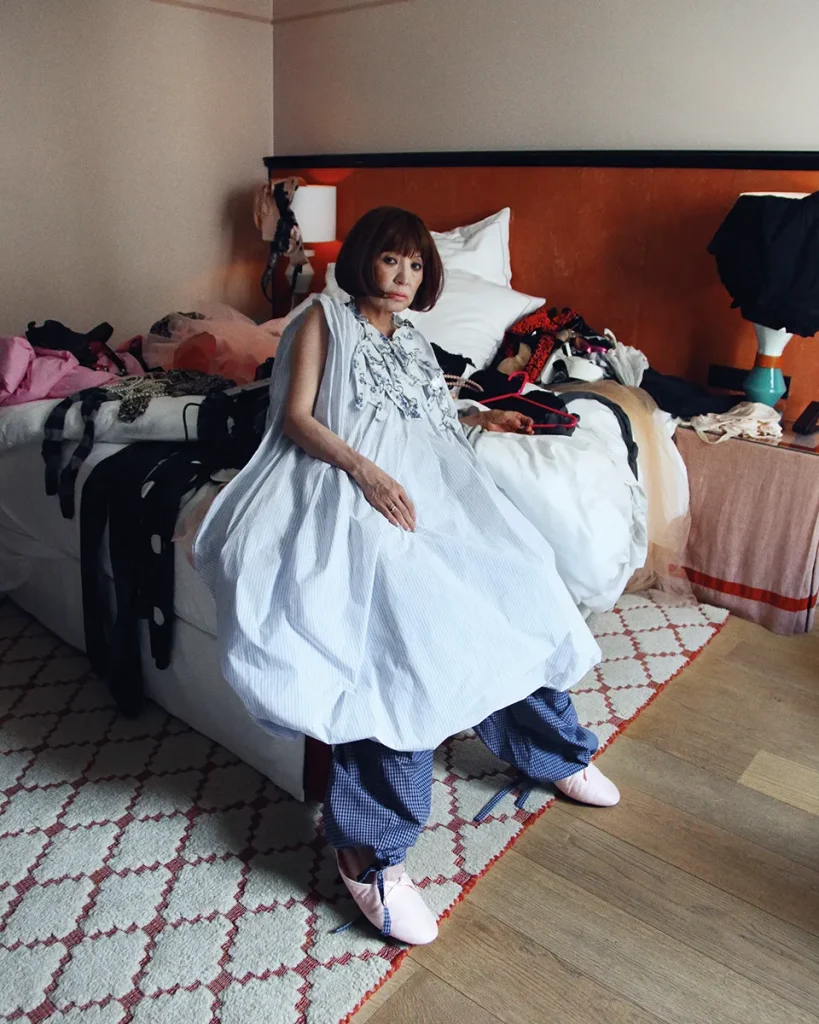
Dress JACQUEMUS Headpiece ANOMALIES DEPARTMENT Necklace ADELE HAMSUND
NCB: We discussed earlier how you’ve been a technology enthusiast for years—it even showed in your early records with songs like ‘Slave to The Computer.’ How do you feel about the role of technology in our lives today, AI…?
PGF: I think we should have a good friendship with AI. It’s not the enemy, we have to be friends.
NCB: Speaking about friends, you collaborated with Mayah Alkhateri and Sega Bodega’s project Kiss Facility. I imagine that must have been special—connecting with young artists and making something together. Would you like to do it again with some other young artists? I’ve heard you like FKA twigs—I’d love to see that collaboration happen.
PGF: Oh, yes! I like collaborating, but it’s also something difficult to do. I’ve done lots of collaborations before, but it’s hard to keep the motivation all the way until the release. It’s difficult to say now, but I think I’ll have something soon, maybe next year.
NCB: Are there international young artists that you’ve been listening to lately?
PGF: I like james K, Eartheater, and lots and lots more!
NCB: Because you wanted to be a music journalist, I’d like to know—what question would you ask yourself to end this interview?
PGF: Hmmm… “Are you happy now?”
NCB: Oh! And what would be the answer?
PGF: I think I’m happy, but sometimes I get tired of being POiSON GiRL FRiEND. It’s one of my projects, and I want to make some other music, like acoustic. But if I release my new album and it’s only piano or guitar music, maybe people won’t be satisfied and will say, “Oh, this is not POiSON GiRL FRiEND.” That is a bit of a problem. If I make music as POiSON GiRL FRiEND, I think I will make the same sound.
NCB: Would you like to explore that initial idea you had in the early days of making acoustic music?
PGF: Sometimes. I still love club music, like the kind I made with Kiss-O-Matic, but sometimes I don’t. I also love Brazilian music, like samba… It’s always changing!
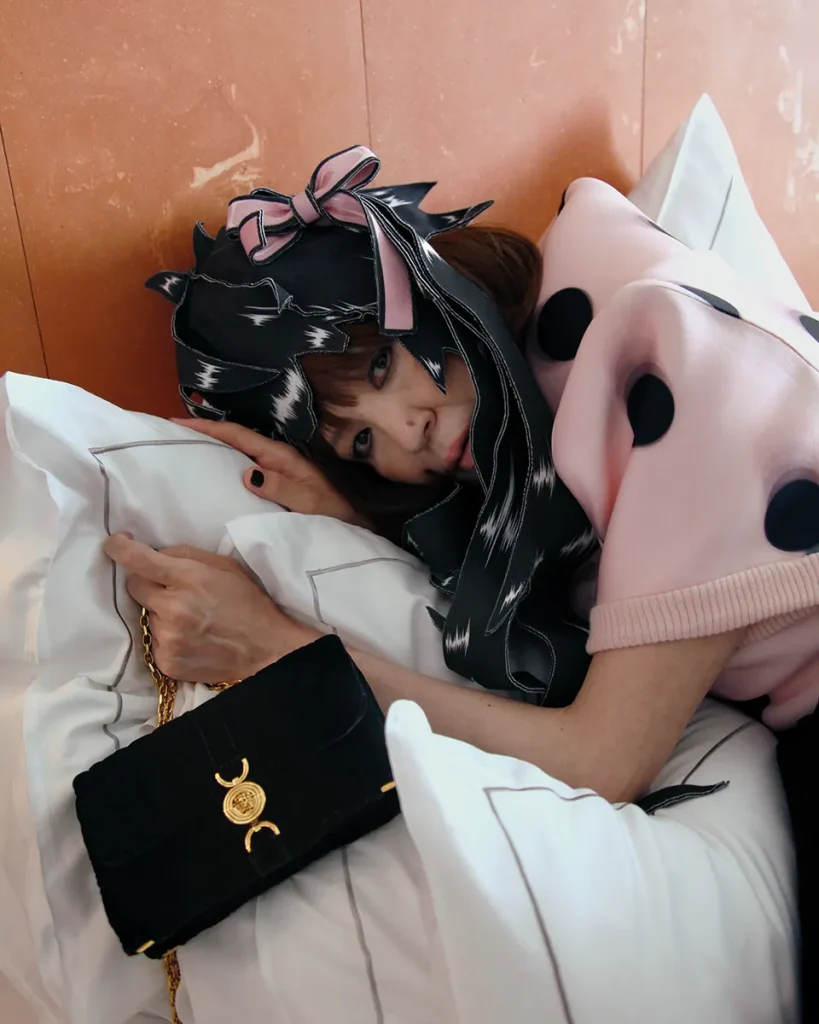
Top VICTOIRE PÉDRON Skirt MM6 MAISON MARGIELA Tights CAPRICE Belt STYLIST’S OWN Headpiece CFIERCE Bag VERSACE
Photography ALEX BRUNET & OLGA VAROVA
Styling LEA WILBRAND & DALIAH SPIEGEL
Talent POiSON GiRL FRiEND
Art Direction DALIAH SPIEGEL
Make-up YULYA ZALESSKAYA
Production LUCY MULLAN
Styling Assistants VERA PETRYAEYA & LUCY FOURNIE
Post Production ONE HUNDRED BERLIN